Too many children move from one grade level to the next without learning how to read, and it’s not their fault. Save the Children supports the call of the Second Congressional Commission on Education (EDCOM II) to “fix the foundations first” by putting functional literacy at the center of education reform.
The latest EDCOM II reports show that by the end of Grade 3, almost half of Filipino learners are not yet reading at the level expected for their age. By the time they reach junior high school, eight in 10 still struggle to understand what they read.
Fixing the foundations first means ensuring children are supported before they move up. Schools must be honest about learning gaps and use the Academic Recovery and Accessible Learning (ARAL) Program to provide "structured, targeted, and time-bound interventions” for learners who are “furthest behind,” the report said.
“The education crisis is real, but EDCOM II has laid out clear and workable solutions. What matters now is following through, so children get timely support to learn and understand letters, words, sentences, and stories based on their actual reading level before they are promoted to the next grade,” said Atty. Alberto Muyot, Chief Executive Officer of Save the Children Philippines.
Contributing to this reform, Save the Children Philippines supports learning recovery through tested literacy programs. One example is Catch-Up Clubs (CuC), a program for Grades 4 to 6 that uses play and social and emotional learning to help children strengthen their reading skills.
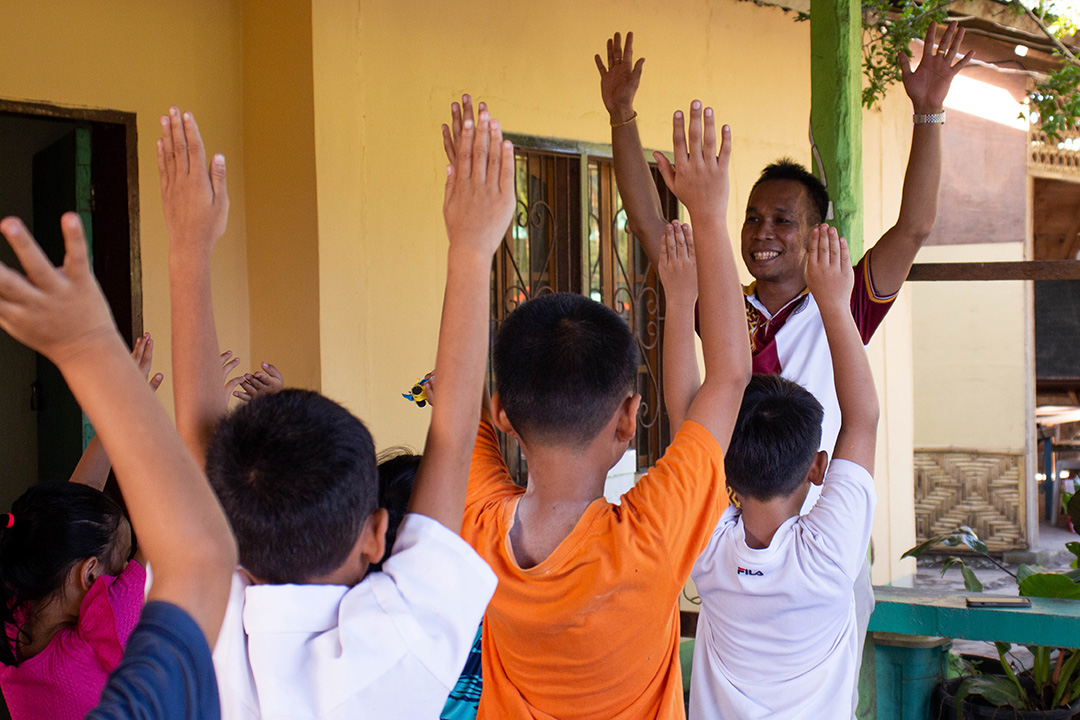
Femar, 35, a Catch-Up Clubs volunteer, supports learners in Sarangani who are struggling with reading through play and social and emotional learning. He says he believes that the success of one child is the success of the whole community. Archive/ Save the Children
In Sarangani, Catch-Up Clubs implemented with the Department of Education (DepEd) Schools Division Office and local government units reached more than 2,400 learners across 100 schools. Seventy-six percent of participating children advanced by at least one reading level.
Anisa* (not her real name), a Grade 5 pupil from an Indigenous Peoples school in a remote barangay in the municipality of Maasim, faces added challenges just getting to class. She uses crutches or a wheelchair and relies on her parents to bring her to school. Through CuC, she joined play-based reading sessions that helped make learning easier to follow.
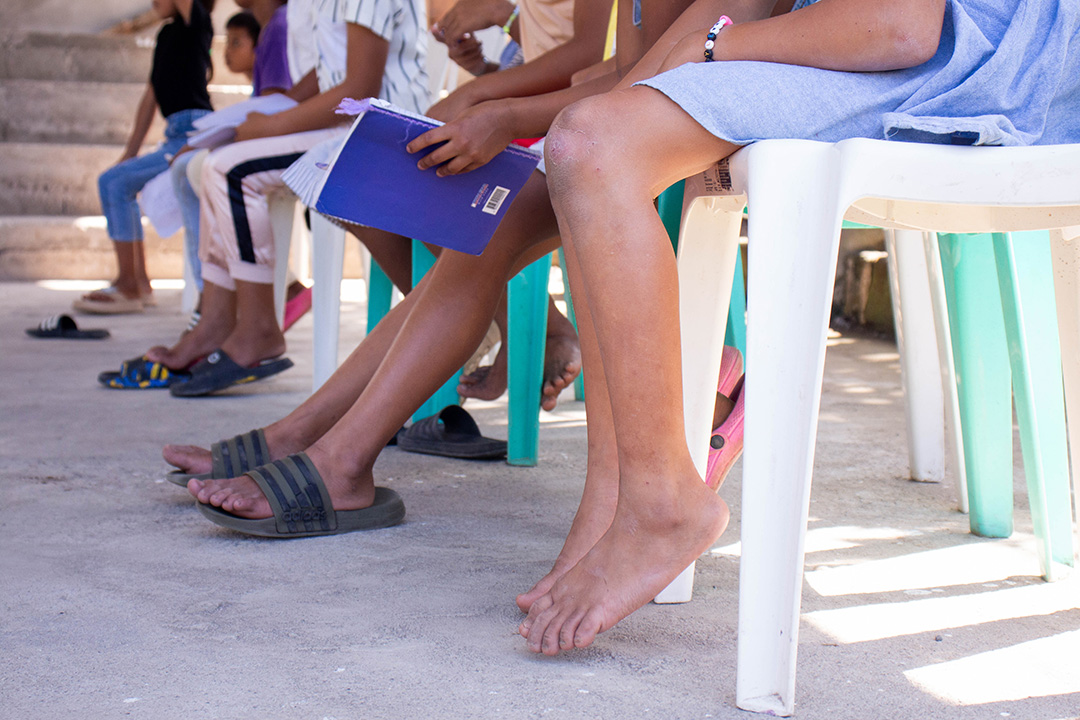
Anisa*, 11, sits with her classmates during a Catch-Up Clubs session in Maasim, Sarangani. She says she dreams of becoming a teacher, someday—one that will allow children like her to have fun by playing while learning. Archive/ Save the Children
“Nakatabang ang CuCs para sayon na lang magtuon” (“CuCs made it easier for me to learn”), she said.
After three months of joining the program, she went from having difficulty recognizing letters to reading and understanding short stories, moving up four levels. Today, English and Filipino are among her favorite subjects.
“Anisa’s progress shows why we should not give up on children who are struggling to read. When learning gaps are addressed early and children are given the time and guidance they need, real progress is possible, regardless of their circumstances,” Atty. Muyot said.
Building on its work in Region XII, Save the Children continues to work with DepEd to position Catch-Up Clubs as a ready-to-adapt model for scaling ARAL. The approach aims to reach not only struggling readers but also children with disabilities, Indigenous children, and those from low-income communities.